|
 Basic Rules For Great Cup of Coffee
JOIN US ON FACEBOOK |
Start With Freshly Roasted Coffee
The aroma of fresh coffee is intoxicating and its beverage is
tantalizing to the palate, while old coffee beans lack aroma and
taste. Your coffee should be stored in a cool, dry, and dark place
in an airtight container the ideal type is glass.
Storing Coffee
In the whole bean is the best method, as it exposes less surface
area of the coffee to oxygen than ground coffee. Four of the
biggest problems of Coffee are: Air, light, moisture and
temperature (either extreme).
Never store your coffee in the refrigerator. Coffee will absorb
flavors and aromas from other food products in your refrigerator.
Freezing coffee can also have a damaging effect,
and it is not recommended unless you will not
use-up your supply of coffee for a prolonged period of time. Coffee
should be stored in a clean, dry, airtight container, in a cool,
dark place…and avoid extreme temperatures either way.
|
 |
Match The Grind Of The Coffee To The Type Of Brewer
Before they can be used to brew a beverage, roasted
coffee beans must be ground. Grinding exposes the cell
walls within the coffee beans, allowing the flavors
trapped inside to be extracted during the brewing
process. The degrees of coffee grind range from fine to
medium to coarse. Always grind your coffee beans just
before brewing for maximum freshness.
|
|
The finer grinds will produce stronger/heavier coffee
and the coarser grinds will generally produce a
weaker/thinner brew (assuming that you brew for the same
length of time). Always brew only what you are going to
consume quickly as the longer the water stays on the
grounds, the stronger (sometimes bitter) the coffee will
get.
|
Use Fresh, Cold Water
Cold water provides "freshness" because it contains a small amount
of dissolved oxygen, which hot water lacks. Water represents
between 97 and 98 percent of the finished beverage, so the type of
water going into your coffee has a big impact on the final taste of
the beverage. A good quality bottled water is recommended, but a
filtered tap water will work just fine. It is not recommended to use
distilled water as it often produces a very flat/bland taste
character. The same holds true for water softeners, as the salt used
in the process will often create a bitter character in the brewing
process.
|
 |
Use An Established Coffee-To-Water Ratio
Start with the recommended ratio of 2 1/2 ounces of
coffee to every 64 ounces of water, and then make your
adjustments to match your individual taste preferences.
Use more or less coffee to taste, assuming the grind is
correct for the brewing method. Sometimes a slight
change in grind will give unacceptable results, but the
grind should be your constant. Adjusting the water or
amount of coffee will create a more consistent and
manageable result.
Most home brewers are of the 10-cup capacity, which in
actuality is a total of 56 ounces. That is, each cup is
only 5.6 ounces.
To brew a good cup of coffee you should use 1.8 oz (4
tablespoons) of coffee in a 10-cup pot.
To brew a good cup of coffee you should use 2.5 oz (5
tablespoons) of coffee in a 12-cup pot.
Basically for every ounce of water, you should use .044
ounces of coffee.
1 rounded tablespoon of coffee is equal to 1/2 ounce. |
|
Ensure The Brewing Water Reaches The Correct Temperature
Most electric drip brewers heat water to the appropriate
temperature. For manual drip methods, bring the water to
boiling and pull it off the heat source. The water will
have cooled to the appropriate temperature when it is
poured immediately over the coffee. |
|
Coffee experts agree that the ideal water temperature
for extracting coffee is 190° to 200° F. Too low a
temperature causes slower extraction, resulting in weak
coffee. Too high a temperature leads to an extraction
that often results in bitter-tasting coffee. |
|
Remove Grounds Immediately
In drip methods, remove the filtering device and
dispose of the grounds as soon as all the water has
dripped through. Once the coffee has released its
desirable taste and aromatic properties, all that
remains are bitter oils that will continue to drip into
the brew if not removed. In addition, never pour brewed
coffee through spent grounds; the resulting beverage may
look darker but will taste bitter.
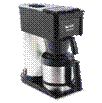
Bunn BT10
We
sell Bunn Coffee Makers and Grinders. Contact us for
Retail and Wholesale pricing.
Happy Trails Cafe is an Authorized Bunn Distributor.
|
Flavored Coffee
Drip brewing methods extract the stronger coffee flavoring materials
first, followed by the less soluble, weaker flavoring materials.
Removing some of the beverage before complete extraction occurs will
upset the balance of the total brew. To make sure the flavoring
materials mix well, lightly stir or swirl the beverage before
serving. To enhance the flavor, add a teaspoon of sugar directly to
the filter before brewing.
|
 |
Serve Coffee Immediately After Brewing
Coffee made in an electric drip brewer can remain hot on
a warmer for a maximum of 30 minutes, but the longer the
beverage sits the less desirable it becomes. If you plan
to transfer the freshly brewed coffee to a thermal
carafe or air pot, preheat the container with hot water
to enhance its heat-retention capabilities. |
|
Remove Coffee Pot From Heat Immediately
While it is sometimes impractical, it is strongly
recommended that coffee be removed from any heat source
as quickly after brewing as possible. Coffee made in
drip makers that do not brew into some kind of
insulated, non-heated carafe should be transferred to a
preheated carafe or air pot as soon as possible. |
|
|
Heat begins to break down the coffee character
immediately, and after 15 minutes on the warmer it no
longer tastes like the coffee that was brewed. A good
air pot or insulated carafe that is pre-heated with
boiling water will only lose 5° to 7° of temperature per
hour, so the coffee will have a great taste for hours. |
Never Reheat Brewed Coffee
Re-heating, even in a microwave, breaks down the coffee’s basic
flavor components, results in a completely different flavor than the
original beverage, and often creates a very undesirable flavor.
Regularly Clean All Equipment
After each use, wipe the brewer with a clean cloth and rinse the
brewer with clean water to remove coffee oils. Residues of old
coffee dissolve in contact with hot water, adversely affecting the
flavor of the just-brewed beverage.
Empty coffee grinders of any remaining particles and thoroughly
rinse thermal containers after every use. Pay particular attention
to these steps when using flavored coffees, which leave residues
that can detract from the flavor of other brews.
Make sure you rinse thoroughly all soap residues on the brew baskets
and/or the carafes. |